Feral cats (another name for homeless cats who have lived their entire lives outside) are born in the wild, and thus, have had very little contact with humans. Many animal lovers who find themselves in contact with a feral cat wonder if they can be domesticated, trained, and ultimately welcomed into their home as a pet, particularly if you’ve discovered a cat living outdoors in either cold weather, or a heavily trafficked and/or potentially unsafe environment.
The good news is that, yes, feral cats can become your new live-in feline friend. But there are several very important steps you must take first. Domesticating a feral cat is certainly not a task for the faint of heart and will require an enormous amount of time and patience.
What to Do If You Find a Feral Cat
Whether it found its way into your yard or you frequently spot a particular homeless cat lurking around your neighborhood, if you somehow find yourself in the company of a feral cat, there are some steps you can take to ensure both your safety, as well as the kitty’s. Keep in mind that because these cats have never had the pleasure of bonding with a human in any meaningful way, they often consider all people as large predators and are generally not afraid to act accordingly by biting, hissing, or even scratching or otherwise attacking you.
You should also never approach a cat that seems sick, even though you likely want to do everything in your power to help the poor kitty. If a feral cat has randomly shown up at your back door, there’s a decent chance he or she has rabies, and it’s far safer to call local animal control and avoid the risk of being bitten or scratched and requiring medical attention.
Above all, anyone who considers taming a feral cat must know that it will likely take several weeks—or even longer if you’ve found a particularly skittish kitty—so patience is of utmost importance.
How to Tame a Feral Cat
Several factors will determine your ability to tame a feral cat, including the age and personality of the cat, as well as the kinds of experiences the cat has had on the street (as well as previous encounters they’ve had with other humans).
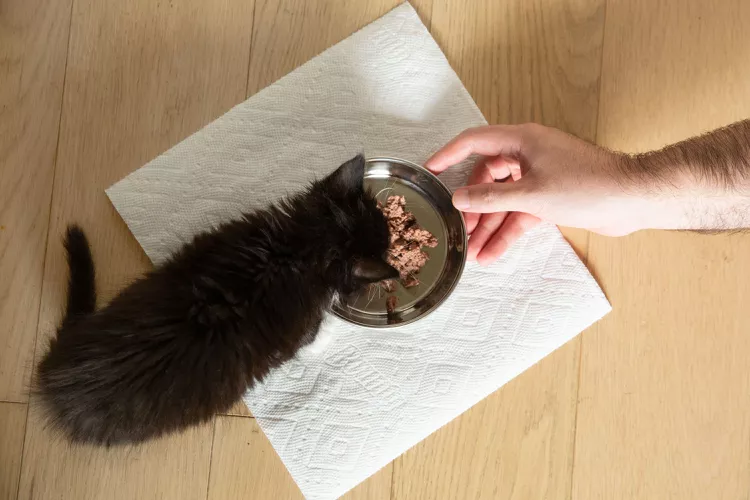
But there is one thing we humans have in our arsenal that will greatly increase your chances of training a feral cat—and that’s food. It’s widely understood that wild cats became domesticated in the first place because they became content with the idea of having access to regular meals, so if you’re thinking about taming a feral cat in your neighborhood, you’ll want to begin by establishing some sort of routine around food. For example, be sure to offer some cat food to the cat at the same time and in the same place every day, perhaps in a certain area on your porch or patio.
However, try not to make eye contact when you spot the cat (like dogs, eye contact can be perceived as a threat). Instead, remain still and quiet and either sit or stand quietly in the general vicinity while the kitty eats. After a few days, you can build up to speaking to your cat in a calm and reassuring voice.
If it seems like the cat is letting down its guard and beginning to trust you, try moving the food a little bit closer to you each day. You can also try offering a few special treats along with the meal. It’s important to keep in mind that you won’t want to touch the cat until you’re very confident that he or she will allow it. When you're ready to give it a go, try reaching out to pet the cat without making any sudden movements. If the cat backs away from your touch, give it a few days before trying again. Also, try letting the cat sniff your finger or the back of your cupped palm (with fingers bent inward to face yourself) beforehand. Eventually, you can gradually progress to petting the cat and even gently picking it up. However, remember to always wash your hands and arms thoroughly after handling any feral animals.
Safety and Other Considerations When Bringing Home a Feral Cat
While the next step may seem like you can finally open your door to your new feline friend, you’ll want to avoid bringing it inside, particularly if you have other pets (or children). Instead, take the cat to the veterinarian to have a full checkup and vaccinations, as well as to be spayed or neutered (this will, of course, require the cat to trust you enough to put it into a crate for the trip). This step may take several attempts, but it’s absolutely essential for your health and safety, as well as your new cat’s.
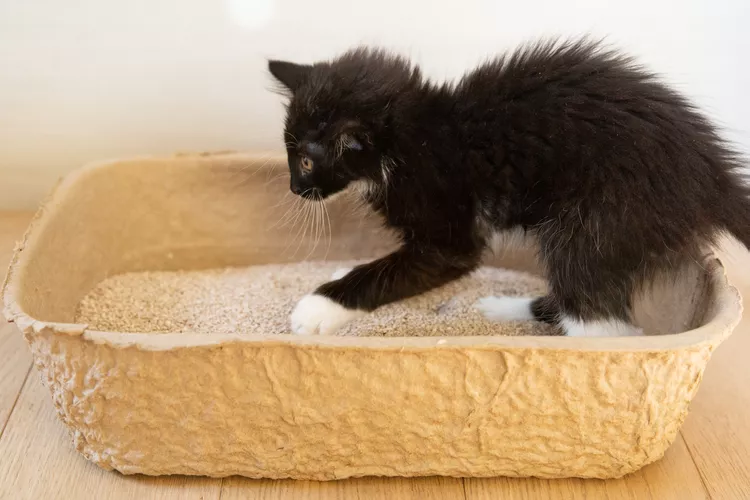
If you have the all-clear from your vet and you're ready to welcome your new kitty home, you'll want to start with a special quiet, somewhat secluded space that's set aside just for the cat. Consider furnishing your cat's new living area with some cat trees, towers, and scratching posts, as well as places to hide and sleep. And, of course, don't forget the basics like a cat food and water bowl and a litter box. Fortunately, even cats who have spent their entire lives outdoors can generally grasp the concept pretty quickly.
Be sure to keep your interactions brief, until your new cat seems comfortable with its new surroundings. In time, your new cat should forget their days on the street and be more than content to relax and play at home with their new family.